148751 stories
·
0 followers

GLOBAL SECURITY AND INTELLIGENCE NEWS REVIEW - for the week of August 22, 2026

1 Share


Here is a review of the most significant developments in global security and intelligence for the week of August 22, 2026, focusing on strategic technologies, structural reforms, and counterintelligence operations.

Artificial Intelligence & Strategic Defense

UK Evaluates Sovereignty Risks Over U.S. AI Dependency
The UK Cabinet Office has launched an urgent assessment of the economic and security impacts of potentially losing access to frontier U.S. artificial intelligence models. This inquiry was triggered by a June 2026 directive from U.S. President Donald Trump that temporarily restricted foreign access to Anthropic's Fable 5 model. British economic security officials are analyzing the systemic risks if critical AI tools are suddenly gated, particularly the threat of foreign adversaries exploiting cyber vulnerabilities using advanced AI before UK defenders can access the same capabilities to patch them.

Intelligence Oversight & Structural Reforms

Germany Advances Historic Intelligence Expansion
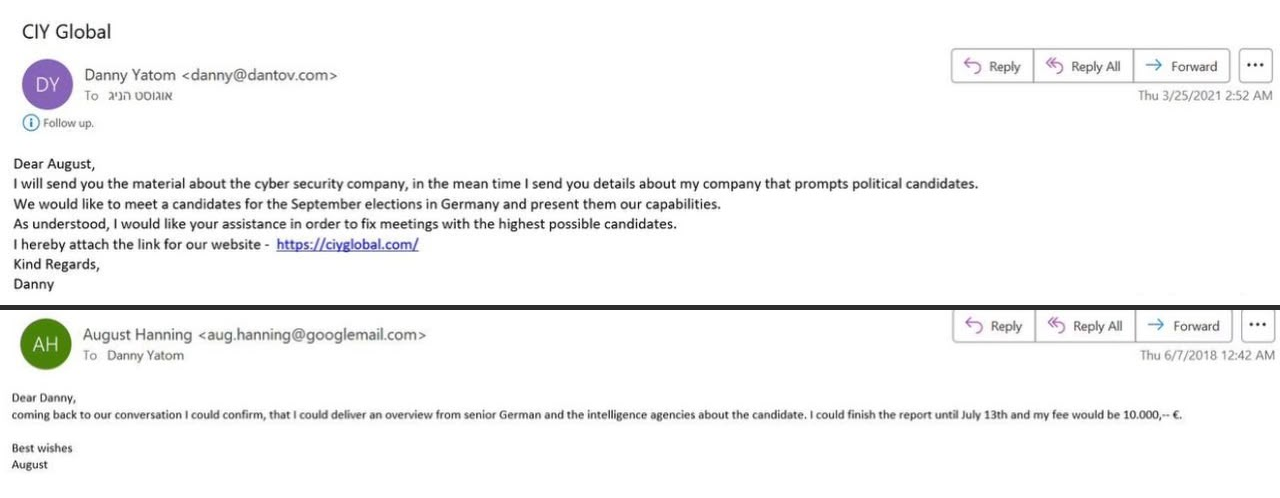
Germany is moving toward its most sweeping intelligence restructuring since World War II. Under reforms detailed by Minister of the Interior Alexander Dobrindt, Germany’s covert agencies will be granted the mandate to conduct offensive intelligence, sabotage, and information operations abroad. Notably, the legislation—expected to pass the Bundestag in September—will authorize agents to use kinetic means (including firearms) for self-defense, fundamentally shifting the operational posture and tradecraft of German intelligence.

Counterintelligence & Espionage

Multinational Coalition Disrupts Chinese Cyber-Recruitment Network
A joint counterintelligence operation by the U.S. FBI and agencies in Australia, Canada, New Zealand, and the UK has resulted in the seizure of 13 fake corporate websites. These professionally designed domains posed as Western consultancy firms offering to hire experts, but operated as a Chinese espionage apparatus designed to solicit sensitive insights and recruit Western professionals.

Probe into Russian Complicity in Iranian Strikes on CIA Sites
U.S. intelligence analysts are investigating whether Moscow provided targeting data to Tehran following a series of surgically precise Iranian strikes on secret CIA facilities in the Gulf. The attacks have targeted specific buildings across at least three Middle Eastern countries over recent months. While an intelligence-sharing pact between Russia and Iran is well-documented, the precise extent of Russian operational support in these specific strikes remains under assessment.

Espionage Charges Complicate Sino-Czech Relations
A Czech citizen employed by a radar manufacturer operating in China was detained in late June 2026 under suspicion of espionage, facing charges related to obtaining and passing on unspecified information. This detention is currently stressing the Czech government's recent efforts to build a more pragmatic, trade-focused relationship with Beijing.
-

AI Mode 
Key developments from the past week highlight critical friction points spanning the Middle East, South Asia, Eastern Europe, and global cyber defense sectors. [1, 2, 3, 4, 5]

⚠️ Middle East & Economic Warfare

  • Economic "D-Day" Counter-Measures: The United States has initiated a massive economic crackdown targeting the Iranian regime’s oil smuggling networks, front companies, and international maritime shipping. Foreign banks and corporations providing secondary assistance face severe U.S. sanctions. [2, 4]
  • Strait of Hormuz Deadlock: Tensions remain at a peak due to Iran's continued blockade threats regarding the Strait of Hormuz. Military observers report ongoing strikes and active counter-proxy operations across the theater. [1, 4, 6]

📌 South Asia & Eastern Europe Friction Points

  • Indus Waters Treaty Suspension: India’s government has suspended the long-standing Indus Waters Treaty with Pakistan. While Pakistan issues retaliatory threats, India has moved forward with building multiple regional hydropower projects along the Chenab river tunnel. [5]
  • Mass Terror Operative Arrests: Indian domestic intelligence operations successfully thwarted a major planned cross-border assault, arresting over 200 terror suspects across 14 states. Large quantities of improvised explosive devices (IEDs) and weaponry were seized. [7]
  • North Korean Drone Support: Intelligence reports verified that North Korea has expanded its military assistance to Russia, deploying specialized drone operators directly into active combat theaters. [2]
  • Black Sea Intercepts: Romanian jet fighters successfully intercepted and destroyed a naval drone operating dangerously close to a Black Sea gas platform to mitigate critical infrastructure infrastructure risk. [2]

🔎 Artificial Intelligence & Cybersecurity Controls

  • Mandatory AI Cybersecurity Testing: Moving away from a purely deregulatory approach, the White House has issued an executive order mandating advanced cybersecurity vetting for powerful next-generation AI models. [3]
  • 30-Day Vetting Protocols: Leading AI developers must now submit advanced coding and autonomous systems to federal agencies—including the Department of Defense and Homeland Security—for a 30-day evaluation window to identify structural vulnerabilities before public release. [3]
  • Defense Procurement Strain: A comprehensive review of the U.S. Defense Research Enterprise exposed significant friction points. Government procurement cycles are falling behind commercial tech advancement paces, creating "predictable obsolescence" in fields like AI and cloud computing. [8]
Read the whole story
Michael_Novakhov
8 minutes ago
reply
http://michael_novakhov.newsblur.com/
Share this story
Delete

Russia - Ukraine war news today - 10:30 AM

1 Share


#Russia-#Ukraine #War https://share.gemini.google/QQPGw6C3xa0R Russia-Ukraine War Updates - Gemini Here are the latest developments in the Russia-Ukraine war for today, August 22, 2026 - 10:30 AM : Russian Attacks on Ukraine Missile Barrage on Kyiv: Explosions were heard in Kyiv early this morning as Russia launched a series of ballistic missiles at the Ukrainian capital, triggering air raid alerts and emergency responses. Strike in Kryvyi Rih: The death toll from a Russian "double-tap" strike on a shopping center in Kryvyi Rih has risen to at least 16 people killed and 130 injured. Nationwide Casualties: Across Ukraine, Russian attacks over the past 24 hours have killed at least 7 people and injured 31. This included a strike on a border crossing with Moldova. Ukrainian Strikes Inside Russia Drone Attacks on Industrial Targets: Ukraine launched strikes deep into Russian territory, including an attack that set a major oil refinery in Perm ablaze. Ozon Warehouse Fire: Ukraine struck a warehouse belonging to Ozon (Russia's second-largest online marketplace) in the Samara Oblast, causing a fire that forced the evacuation of over 500 employees. Air Base Hit: A Ukrainian attack on the Akhtubinsk air base—home to Russia's 929th State Aircraft Test Center—reportedly damaged a Russian Su-34 bomber. Espionage Claims and Detentions Arrests in Moscow Region: Russian authorities, citing the Federal Security Service (FSB), announced the arrest of eight individuals accused of planning an attack on a "strategic defense enterprise" in the Moscow region. The FSB claims the group was operating on behalf of Ukrainian special services and possessed 35 drones equipped with explosives smuggled from the EU. Detention in Murmansk: A foreign national was detained in the northwestern Murmansk region while allegedly attempting to cross the border into Norway. Russian authorities suspect the individual of scouting petroleum transport trains and administrative buildings in Moscow. Diplomatic and Political Developments U.S. Delegation in Odesa: Former U.S. envoy Keith Kellogg led a delegation to Odesa to inspect damage to port infrastructure from Russian strikes and review measures to maintain operations. Election Interference Charges: In Russia, a Communist politician was fined over a photograph involving the late opposition leader Alexei Navalny, a move that is likely to bar him from participating in upcoming elections. - Russia - Ukraine war news today - AI Mode - 10:30 AM Russian forces have intensified heavy aerial bombardments across Ukraine, launching devastating missile and drone strikes that have caused severe civilian casualties in Kyiv and Kryvyi Rih. Meanwhile, Ukrainian long-range drones have retaliated by striking major economic and energy infrastructure deep within Russian territory. [1, 2, 3] 🔴 Deadly Strikes in Ukraine Shopping Mall Attack: A Russian "double-tap" drone strike targeted a busy shopping center in Kryvyi Rih—the hometown of President Volodymyr Zelenskyy—killing 16 people and injuring 130 others. [2, 4, 5] Kyiv Infrastructure Blitz: Russian ballistic and cruise missile salvos bombarded the capital city, killing at least 16 people. An overnight strike on the capital's railway network killed a national rail operator employee. [1, 3, 6] Airspace Incursions: The massive aerial campaign saw Russian drones penetrate the airspace of NATO neighbors Moldova and Romania, destroying a drone near a Romanian natural gas platform. [7] 🔵 Ukrainian Retaliation & Drone Strikes Oil Refinery Hit: Ukrainian forces launched a successful overnight drone counter-attack against an oil refinery in Russia's Samara region, sparking a massive fire. [2] Retail Supply Hubs: For the first time, Ukraine targeted a warehouse belonging to Ozon (Russia's second-largest online retailer) in Samara. This follows previous Ukrainian logistics strikes against Wildberries hubs aimed at disrupting funds financing the war. [2] Cross-Border Casualties: Russian officials reported downing 457 Ukrainian drones overnight. Local governors stated that cross-border strikes killed two children in Krasnodar and two people in the Belgorod region. [2] 🌐 Diplomacy and Geopolitics Stalled Peace Talks: Russia announced it remains open to "new ideas" but reiterated Vladimir Putin's strict demands. Ukraine must fully surrender the eastern Donbas region, demilitarize, and drop its NATO ambitions. [8] U.S. Mediation: Following stalled Geneva negotiations earlier this year, President Zelenskyy stated his diplomatic team is preparing "new approaches" to revive peace talks with U.S. mediators. [8, 9] Intel Espionage: In international news, Australian police arrested and charged a man for attempting to share sensitive Ukrainian military intelligence with Russian agents. [5] Would you like to set up an information agent to monitor daily updates on the frontline positions or the progress of the U.S.-brokered peace negotiations?
Read the whole story
Michael_Novakhov
1 hour ago
reply
http://michael_novakhov.newsblur.com/
Share this story
Delete

Russia says ready for ‘new ideas’ on Ukraine war that match Putin’s goals

1 Share

Deputy Foreign Minister Sergey Ryabkov suggests Moscow is keen for the US – which has shown support for Russia’s agenda – to revive its involvement in negotiations.

Moscow is ready to listen to new ideas for ending the war in Ukraine, provided they align with President Vladimir Putin’s position, a senior Russian diplomat has said.

Deputy Foreign Minister Sergey Ryabkov said in an interview published by News.ru on Friday that Russia is open to proposals that are in line with “realities on the ground”.

Recommended Stories

list of 4 itemsend of list

Ryabkov’s words suggest that Moscow may be seeking to revive the Trump administration’s support for its agenda. Moscow previously welcomed the United States’ demonstrating “an understanding of Russia’s position”, but Washington has been distracted from mediation efforts amid its war on Iran.

“The Russian Federation is ready to listen to any reasonable proposals and ideas that are in line with the goals set by the Russian president and meet the ‘realities on the ground’,” Ryabkov said.

“At this stage, it is more important to what extent Washington is able to influence the decisions of the Kyiv regime and its European sponsors, who still dream of a ‘strategic defeat’ of Russia,” he added.

Putin has previously demanded that before agreeing to a ceasefire in the war he launched in February 2022, Ukraine must hand over the whole of the eastern Donbas region, demilitarise, and pledge it will not seek to join NATO.

Several rounds of US-brokered negotiations at the start of the year failed to reach a settlement. Further talks slated for early March were cancelled as the US launched its war on Iran alongside Israel.

The meetings followed the circulation of a 28-point, Washington-generated peace plan last November that raised ire for its capitulations to Russian demands.

US special envoys Jared Kushner and Steve Witkoff led the negotiations between Moscow and Kyiv earlier this year, but the Kremlin said on Thursday that it has no new information on a potential visit from the duo.

Want to come back to this article? Save it for later.

Ukraine is also awaiting the return of the US mediators. President Volodymyr Zelenskyy said on Thursday evening that he was “preparing decisions within the diplomatic team”.

“New approaches are needed in some areas, particularly in the United States,” he said, adding: “Ukraine needs results.”

Zelenskyy met with US President Donald Trump at the White House last month, where they discussed reviving the talks and plans for Ukraine to produce Patriot missiles.

Ongoing attacks

On the ground, Russia and Ukraine have stepped up deadly attacks in recent weeks, with dozens killed and neighbouring nations becoming increasingly concerned about potential spillover.

The hostilities continued overnight. In eastern Ukraine’s Kharkiv region, Russian attacks killed two women, the state emergency services wrote on Telegram. The attack triggered fires at five residential buildings and several cars.

Another attack on a home killed one person and injured another in Ukraine’s Zaporizhia region, governor Ivan Federov said.

In Russia, a Ukrainian drone attack damaged an industrial facility in the Perm region in the Ural mountains, according to regional governor Dmitry Makhonin.

Energy infrastructure has become a major target of both sides.

Zelenskyy confirmed that a major oil refinery in Russia’s Perm region – the target of several recent attacks – was hit by drones, as well as a ⁠military air base in the Volgograd ‌region

⁠Ukraine’s Energy Minister Denys Shmyhal ⁠said Russian ⁠attacks have damaged or ⁠destroyed more than ⁠300 fuel stations in the past six months, causing “significant losses ⁠for our ⁠economy”.

Russian drones meanwhile damaged a border crossing with Moldova in Ukraine’s southern Odesa region, Ukrainian authorities said.

Finland’s border guard said a suspected Russian reconnaissance plane violated Finnish airspace in the western gulf on Thursday.

Read the whole story
Michael_Novakhov
5 hours ago
reply
http://michael_novakhov.newsblur.com/
Share this story
Delete

Russian expert warns of impending social crisis as Ukraine death toll rises

1 Share

Russian ballistic missile attacks have begun to cause record civilian deaths in Ukrainian cities without any Patriot interceptors to stop them, but Ukraine’s long-range strikes have destroyed Russian fuel supplies.

With the Russian economy struggling, a top expert warned that social unrest could unfold in a matter of time – and consequently lost his job.

Recommended Stories

list of 4 itemsend of list

On Tuesday, Russian missiles killed at least 10 people in Pechenihy, a town 40km (25 miles) east of Ukraine’s northern city of Kharkiv. On Thursday, they killed 15 people in Kyiv, three in the western city of Zhytomyr and injured 40 at a border crossing between Odesa and Moldova.

INTERACTIVE-WHO CONTROLS WHAT IN UKRAINE-1787233039(Al Jazeera)

Russia said it was targeting weapons manufacturing sites in Kyiv, but Ukrainian President Volodymyr Zelenskyy said Russian forces struck 30 residential buildings, a school and a children’s hospital.

The United Nations said Russia killed a record 437 people in July and injured 2,610, surpassing its previous record in June by 30 percent.

Civilian casualties have continued in August, because Ukraine has run out of Patriot interceptors and has been unable to stop incoming ballistic missile attacks since the beginning of the month.

As Zelenskyy pointed out, Ukraine’s interception rate of cruise missiles and drones is still in the 90-percent range. But Russia is doubling down on the use of ballistic missiles and has brought in an additional 50 North Korean weapons, according to Ukrainian military intelligence.

Ukraine strikes back

Since June 25, Ukraine has launched a campaign of mid-range strikes to disrupt Russian logistics and has harassed fuel and ammunition supplies so effectively that it has made 233sq km (90 square miles) of territorial gains this year.

By August 16, Ukraine’s Unmanned Systems Forces announced it had put 228 supply ships out of action in the Black Sea and Sea of Azov, as well as destroying 243 power stations, electricity substations and gas distribution nodes in Crimea.

They have also been striking relay antennas used to guide Russian drones and radar stations that detect Ukrainian counterstrikes. On August 20, Ukraine struck drone launch sites in Donetsk City and Primorsko-Akhtarsk on the Sea of Azov, as well as a fuel terminal in the Kerch Strait used to supply Crimea.

Want to come back to this article? Save it for later.

Ukraine’s long-range strikes have served a different purpose – to undermine the Russian economy’s ability to fund its war.

On August 15, Ukraine managed to fly two of its Flamingo cruise missiles into the Progress Rocket and Space Centre, 800km (500 miles) east of Moscow, despite Russia’s use of four A-50 early warning aircraft and its reported downing of 822 Ukrainian drones that day.

People look at smoke rising in the city during a Russian drone strike, amid Russia's attack on Ukraine, in Kyiv, Ukraine, August 20, 2026. REUTERS/Oleksandr Ratushniak TPX IMAGES OF THE DAYSmoke rises in Kyiv during a Russian drone strike, August 20, 2026 [Oleksandr Ratushniak/Reuters]

Ukraine said it hit an engine assembly workshop for Soyuz rockets, causing a fire covering half a hectare.

Russia is using Soyuz to launch satellites for its Rassvet constellation to replace dependence on the US Starlink system, after Ukraine managed to cut Russian access to Starlink on February 1 . Russia needs satellites to increase the speed and precision of its counter-battery fire on Ukrainian positions. Its loss of that capacity has been partly responsible for Ukrainian gains this year.

“One Soyuz-2.1b launch vehicle can put 20 satellites into orbit,” said Ukrainian electronics expert Serhiy Beskrestnov. “To create a basic satellite constellation in orbit, Russia needs to carry out 12-15 launches.”

The following day, Ukraine set ablaze a 25-hectare warehouse belonging to the Wildberries online retail chain, Russia’s equivalent of Amazon, and said it had destroyed seven out of Wildberries’ ten largest logistical hubs.

Kremlin spokesman Dmitry Peskov said on July 28 that the Kremlin was monitoring the damage to Wildberries.

Russian President Vladimir Putin implied on Thursday that he might provide government funds for Wildberries to rebuild, saying “logistics and warehousing capacity certainly needs to be restored, including with government support”.

Ukraine has also succeeded in destroying Russian oil refineries and starving its economy of petrol

It has recently struck the Ust-Luga refinery, the Taneco refinery in Tatarstan and the Perm refinery, 1,500km (930 miles) from its borders.

The Izvestia newspaper reported that only 28 percent of petrol stations across the country could supply fuel this week, citing mobile app GdeBENZ, which monitors real-time fuel availability.

Izvestia said only five petrol stations in Moscow were selling high-octane AI-98 fuel. Russians posted video of Rosgvardia police units sitting outside petrol stations to avert some of the fights involving motorists in recent months.

Deputy Prime Minister, Alexander Novak, said lower-grade fuel was being supplied to ease market tensions, and confirmed that Russia is now importing refined fuel for the domestic market.

“We expect a number of oil refineries to complete maintenance work soon and the situation to improve significantly,” Novak told Vesti journalist Pavel Zarubin, but that may be wishful thinking. Ukraine has struck Russia’s largest refineries not once but repeatedly. On Wednesday [August 19 ], it struck a refining unit at Ufa, which was undergoing repairs from a previous strike. It is 1,300km (810 miles) from Ukraine.

Ukraine also struck significant military targets during the week, including the Kamenyy Kombinat plant in Rostov, which makes solid rocket fuel for missiles, and the Savasleika airfield, from where MiG fighters armed with Kh-47M2 ballistic missiles take -off.

Russian economy in trouble

Some Russian economists have begun to warn of impending social and political upheaval as a result of the slowing economy.

Andrey Klepach, chief economist at Vnesheconombank, a state bank that finances the Kremlin’s national projects, warned on August 18 that, “Losses from Ukrainian military strikes … are already becoming a significant macroeconomic barrier to Russian economic growth.

“I believe Russia won’t collapse, but I’m almost certain we’ll reach a social crisis.”

He was removed from his post after making the comments during a discussion at the Moscow Exchange’s Nikitsky Club.

Russians are withdrawing savings in increasing amounts, reported The Washington Post. While businesses are increasing “voluntary” donations to the state defence budget, in addition to having to pay for their own air defences, putting further strain on the economy.

At a meeting of the Council for Strategic Development and National Projects this week, Putin acknowledged that Ukraine’s strikes are “certainly” causing damage, adding that “overall economic performance is modest but positive”.

That damage took financial form in the $1.18bn Putin newly released to aid regional budgets, in addition to previous financial assistance. Some $52m of that was destined for Crimea.

Ukraine’s defence ministry estimated that every dollar spent on drone strikes caused five times that amount in costs to the Russian economy.

INTERACTIVE Ukraine Refugees-1787233086(Al Jazeera)
Read the whole story
Michael_Novakhov
5 hours ago
reply
http://michael_novakhov.newsblur.com/
Share this story
Delete

Return of Harry and Meghan to U.K. Renews Questions About Their Security Fears

1 Share

The couple lost their publicly funded security after deciding to leave Britain in 2020, deepening their split with the royal family.

Prince Harry with a security detail as he arrived at Britain’s High Court last year for a hearing over the downgrading of his personal security during visits to Britain.Credit...Henry Nicolls/Agence France-Presse — Getty Images

Before they left Britain in 2020, Prince Harry and his wife, Meghan, weathered a storm of threats and digital abuse. A former top police official once described their safety risks as “disgusting and very real.”

Such threats made security a paramount issue for the couple once they announced this week that they are returning to live in Britain. Their safety had been at the heart of the fallout from their original decision to leave the country, when the government withdrew their publicly funded, armed security after they stepped down from their royal roles.

The pair have said the decision put them in danger, and it became a bitter flashpoint in their rupture with the royal family. Harry at one point even claimed the move was a plot to keep him in Britain.

The couple have not said what kind of arrangements they have made for their protection upon their return, expected this month. But the kind of security they had access to while living in California for the past few years is not possible in Britain without government resources.

While armed private security is legal and ubiquitous in the United States, guns are tightly restricted in Britain. Even top American law enforcement officials such as F.B.I. agents must get permission from the government to carry firearms in Britain.

Still, an unarmed detail is relatively common among Britons who use private security, said Chris Phillips, a former senior British counterterrorism official.

“There are lot of people over here that have security, and they are not armed,” he said.

As for Harry, he added, “There are going to be threats to him. There is no doubt about it.”

Harry’s and Meghan’s return to Britain comes at a time when they are unpopular with the British public, and news coverage of their security has emphasized comments from Britons saying they do not want the government to pay for it.

The armed details that the government provides are stretched thin, officials have warned, in part because of a high number of protectees. Britain has a record nine living former prime ministers who get round-the-clock security.

Prime ⁠Minister Andy Burnham refused to wade into the royal saga on Thursday when questioned by reporters, declining to say who would foot the bill for protecting Harry, Meghan and their two children, Archie, 7, and Lilibet, 5.

“This is a private matter,” Mr. Burnham said. “It’s a ⁠matter for Harry and ⁠for Meghan, and ⁠we wish ⁠them well in the moves that they are ⁠making.”

As Harry and Meghan split with the royal family in 2020, questions over their safety arose as part of a larger debate over their expectations about a post-royal life.

Image

King Charles with Prince Harry during the funeral of Queen Elizabeth II in 2022.Credit...Pool photo by David Rose

At the time, a committee responsible for some security decisions in Britain decided that the couple would no longer be eligible for the police protection typically given to royal family members.

The committee, known as Ravec, is made up of government and police officials and members of the royal household. It is responsible for making security arrangements for the royal family and other figures put at risk by terrorism or other threats.

Harry challenged the decision, and at a hearing in 2022 said he would reimburse or proactively finance the cost of the security measures.” But Ravec decided it was not right for wealthy people to be able to rent armed police from the government.

Harry has said that his family needed full-time armed protection when visiting Britain, where his father, King Charles III; brother, William, next in line for the throne; and other relatives live. In court, his lawyers revealed threats to his safety and described “additional layers of racism and extremism” that they said were fueling the abuse.

Harry lost part of that legal challenge in 2023, and a judge dismissed his case the following year, but he appealed. In April 2025, Harry’s lawyers argued before England’s Court of Appeal that the decision to withdraw protection violated official policy. The court ruled against him.

Separately, the Ravec committee had planned to review security arrangements in Britain for the family. The panel is independent but overseen by the Home Office. A decision has been delayed because the government had to deal with protecting an “unprecedented nine former prime ministers at once,” The Times of London reported last month.

The Home Office said in an emailed statement on Thursday, “It is our longstanding policy not to provide detailed information on those arrangements, as doing so could compromise their integrity and affect individuals’ security.”

In a BBC interview in May 2025, Harry said that he hoped to finally reconcile with his family. He and the king had fallen out over the security withdrawal. Charles was diagnosed with cancer in 2024.

But Harry was clear about the dangers to his family. “I can’t see a world in which I would bring my wife and children back to the U.K. at this point,” he told the BBC.

He said the last “sticking point” in a return to Britain was security, spurring questions about the turnaround and whether the contentious issue has since been resolved.

Adam Goldman is a London-based reporter for The Times who writes about global security.

Related Content

Advertisement

SKIP ADVERTISEMENT

Read the whole story
Michael_Novakhov
21 hours ago
reply
http://michael_novakhov.newsblur.com/
Share this story
Delete

Trump Threatens Defamation Suit Over National Guard Report, Aiming to Intimidate a Critic

1 Share

It was the latest example of President Trump’s bid to use the legal system against those who voice unflattering facts and opinions generally protected by the First Amendment.

A report by the Center for American Progress determined that there was “no evidence” that President Trump’s deployment of the National Guard to cities across the country had affected the crime rate.Credit...Tierney L. Cross for The New York Times

President Trump has opened a new front in his campaign to intimidate political foes, threatening a prominent liberal think tank with a $5 billion defamation lawsuit over a report concluding that his deployment of the National Guard to cities across the country has had little effect on reducing violent crime.

The threats against the think tank, the Center for American Progress, were Mr. Trump’s latest effort to use the legal system to punish critics for voicing unflattering facts and opinions generally protected by the First Amendment. And while it is unclear how far any suit the president might ultimately file will get in court, it could force the organization to spend money fighting it off and make it even more of a target of his allies and supporters.

On Monday, one of Mr. Trump’s personal lawyers, Alejandro Brito, wrote a letter to the center warning that he would file the suit if the group did not fully retract the report, which was published on its website on July 13. The letter, viewed by The New York Times, was addressed to the group’s president and chief executive, Neera Tanden, a longtime Democratic official who served as a senior adviser to President Joseph R. Biden Jr., and to several of its board members.

Mr. Brito claimed that the report about the National Guard was full of malicious and false statements. He gave Ms. Tanden and members of her board until 5 p.m. on Friday to retract it and apologize to Mr. Trump.

Ms. Tanden pushed back, saying in a statement that the center would “neither cower nor bend in the face” of legal action. She also defended the report, asserting that while its findings might have been “inconvenient to the Trump administration,” they were “grounded in rigorous, evidence-based research and analysis.”

“This threatened lawsuit’s attack on facts and evidence is baseless,” she added. “A fundamental protection of the First Amendment is to allow for the publication of facts and analysis that is contrary to the arguments and claims of any administration. A lawsuit is a transparent attempt to silence us.”

Image

Neera Tanden, the president and chief executive of the Center for American Progress, said that the center would “neither cower nor bend in the face” of legal action.Credit...Jason Andrew for The New York Times

Mr. Trump has often lashed out at scholars and commentators for reproaching or critiquing him in the news media. And since winning re-election, he has filed a flurry of lawsuits against news organizations like the BBC and The Times, claiming they defamed him. He has even filed suit against the Des Moines Register, arguing that a poll the paper published before the 2024 election indicating that he would lose the vote in Iowa amounted to consumer fraud and election interference.

(The Times has filed its own suits against the administration, including two seeking increased access for its reporters at the Pentagon.)

The president has repeatedly claimed that his administration is the most transparent in American history. But he and his aides have used lawsuits and executive actions to go after law firms, universities and television networks. They have also used criminal tactics such as search warrants and grand jury subpoenas in an effort to pry loose sensitive information from reporters.

Many of these efforts have faltered once they reached court and faced judicial scrutiny. Mr. Brito himself has filed multiple failed suits on behalf of Mr. Trump. Last month, a federal judge in Florida referred Mr. Brito for potential disciplinary proceedings after ruling that a suit he filed for the president against the Internal Revenue Service amounted to an improper exercise in self-dealing.

The Center for American Progress report accused Mr. Trump of seeking to take credit for a nationwide decline in violent crime that began before he returned to the White House. The report determined that there was “no evidence” that the National Guard deployments had affected the crime rate, adding that they were poised to cost taxpayers more than $1.7 billion if they continued through the end of 2026.

The report asserted that the “primary goal” of the deployments was “never to stop crime.” Instead, it said they amounted to “a dangerous power grab by the Trump administration.”

The team that put the report together used an analysis based on homicide, violent crime and gun victimization data in cities where the National Guard was deployed — Washington, Los Angeles and Memphis — over the period from January 2023 to this February.

“This approach was employed to identify any statistical changes in crime trends associated with the deployment of the National Guard in specific cities,” its authors wrote.

Mr. Trump referred to the report on social media last week after watching a television segment about the report, which he described as “another Radical Left SCAM.” In the post, he threatened to sue the center and several of its funders, including the liberal financier George Soros, who has long served as a boogeyman for the administration.

A week later, Mr. Brito’s letter arrived at the center, saying that the president would sue if Ms. Tanden and her colleagues did not retract the report, issue an apology and give Mr. Trump unspecified financial compensation.

The letter ended with an all-caps salutation: “PLEASE GOVERN YOURSELVES ACCORDINGLY.”

On Friday, a lawyer for the center fired back in a letter of his own, deriding Mr. Trump’s accusations that he had been defamed.

“This is utterly absurd,” the lawyer, Kevin H. Metz, wrote to Mr. Brito. “Truth is not and cannot be defamation.”

Mr. Metz went on to say that the center welcomed the opportunity to make its case in court and receive more information on the National Guard deployments through the process of discovery.

Other think tanks of various political stripes have rallied to the center’s side.

“Independent organizations across the ideological spectrum must be free to express their analysis and opinions, and to challenge those in power without fear of political retaliation or legal intimidation,” said Peter Goettler, the president and chief executive of the libertarian Cato Institute. “Disagreements on matters of policy should be settled through open inquiry, evidence, and debate — not threats designed to silence criticism.”

Alan Feuer is a reporter for The Times who covers the effects President Trump has had on the courts, the Justice Department and the broader rule of law.

Related Content

Advertisement

SKIP ADVERTISEMENT

Read the whole story
Michael_Novakhov
22 hours ago
reply
http://michael_novakhov.newsblur.com/
Share this story
Delete
Next Page of Stories